TABLE OF CONTENTS
SentinelOne Ingest
1.0 Overview
ADR can ingest logs from SentinelOne using an API token or by sending syslogs to the ADR CCE VM.
2.0 Configuration (via API)
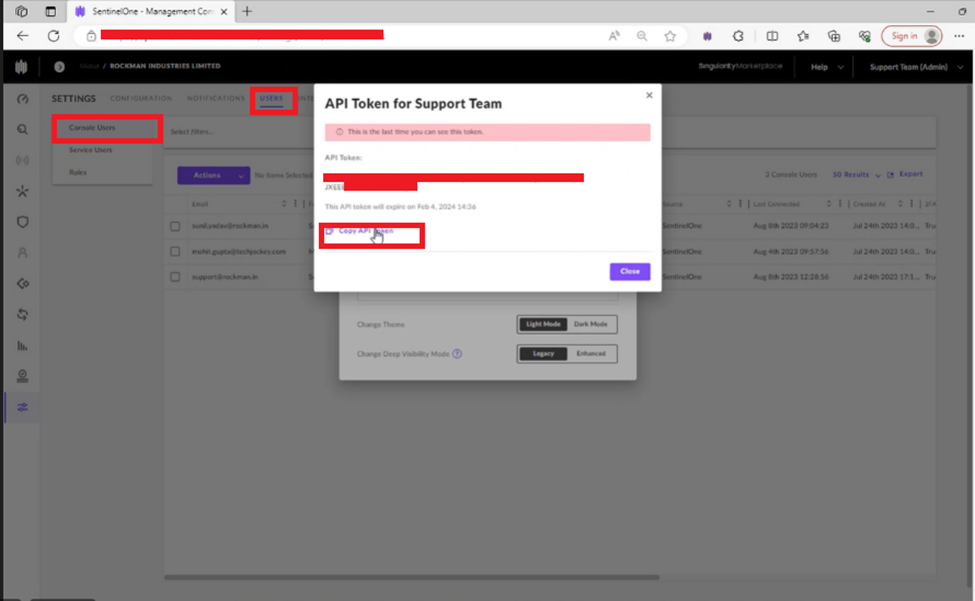
- In the SentinelOne management console, go to Settings and then click Users.
- Click on the Admin that will be used to generate the API token.
- Click Generate next to API token.
- Click on the Copy API token link.
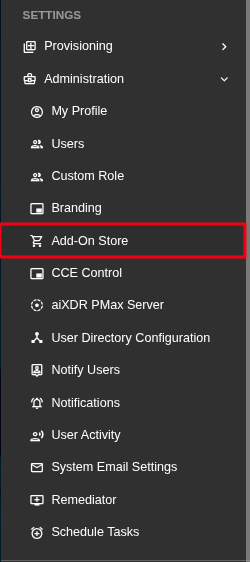
- On the APE dashboard, navigate to Settings -> Administration -> Add-on Store.
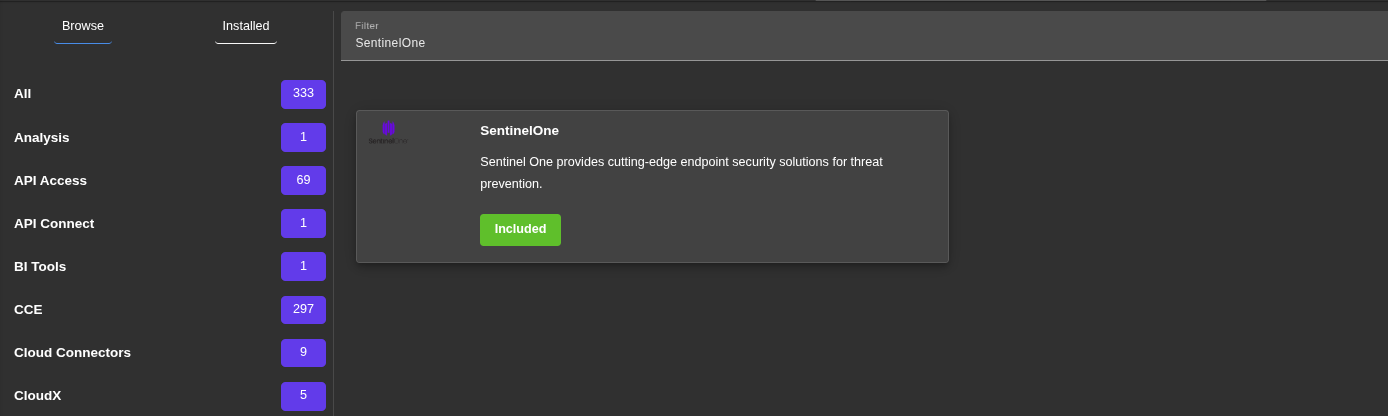
- Search for then select 'SentinelOne'.
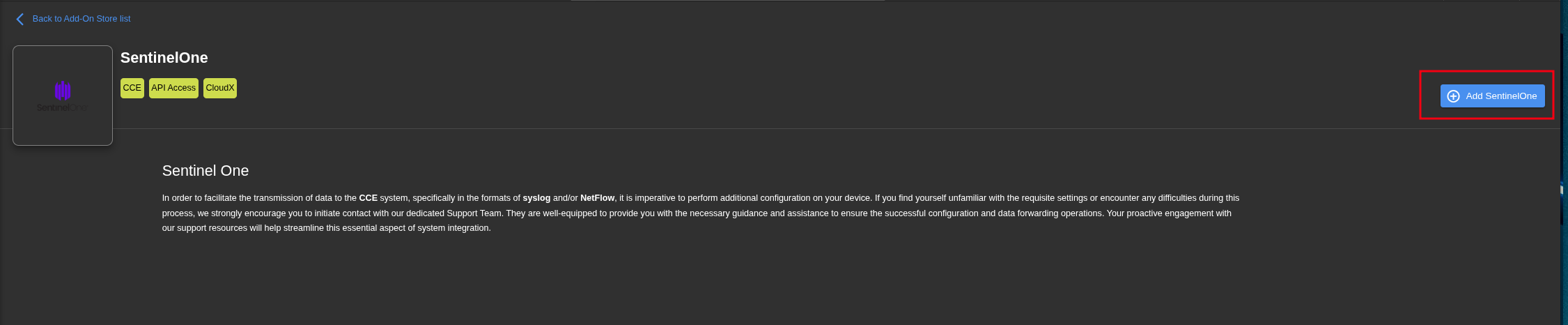
- On the right-side, select 'Add SentinelOne'
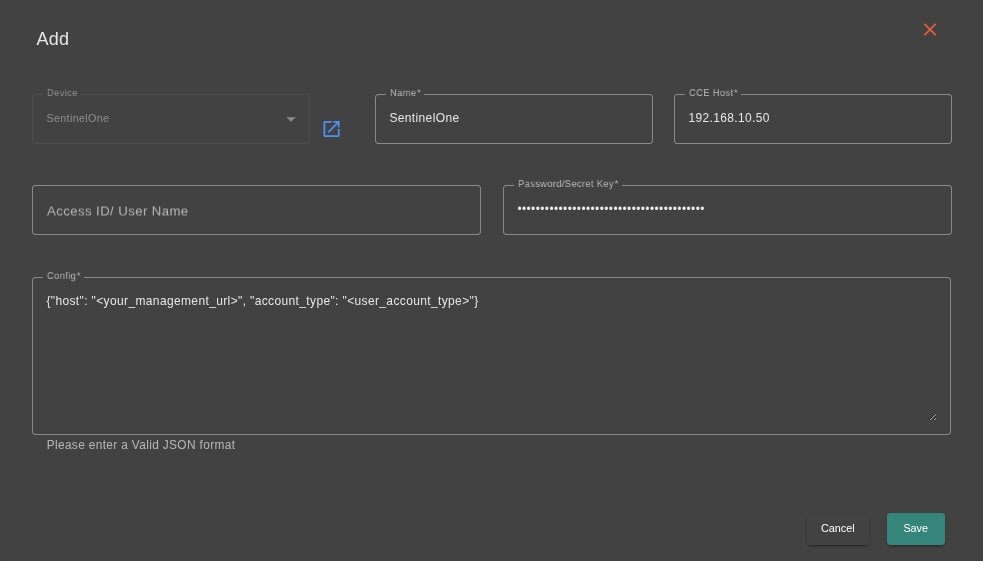
- Fill in the fields as follows, then click the Save button.
- Device: Use the device type 'SentinelOne'.
- Name: Choose an arbitrary name. It can be the same as the Device type.
- CCE Host: Enter the IP address of your CCE.
- Access ID/ User Name: Leave blank.
- Password/Secret Key: Enter the API token previously copied in step 4.
- Config: Use a JSON formatted string:
{"host": "<your_management_url>", "account_type": "<user_account_type>"}- <your_management_url>: Enter your SentinelOne management URL (without https://).
- <user_account_type>: The value can be either “service” or “console”. “console” is the default if none provided.
3.0 Configuration (TCP over TLS)
Follow the steps below to set up SentinelOne configuration to send logs to ADR CCE VM. Note that these steps are not necessary if you have already configured the system to use an API token in the previous section.
- Open the SentinelOne Administrator Console.
- Select your site.
- On the left side menu, click the slider icon [⊶] to open the settings menu.
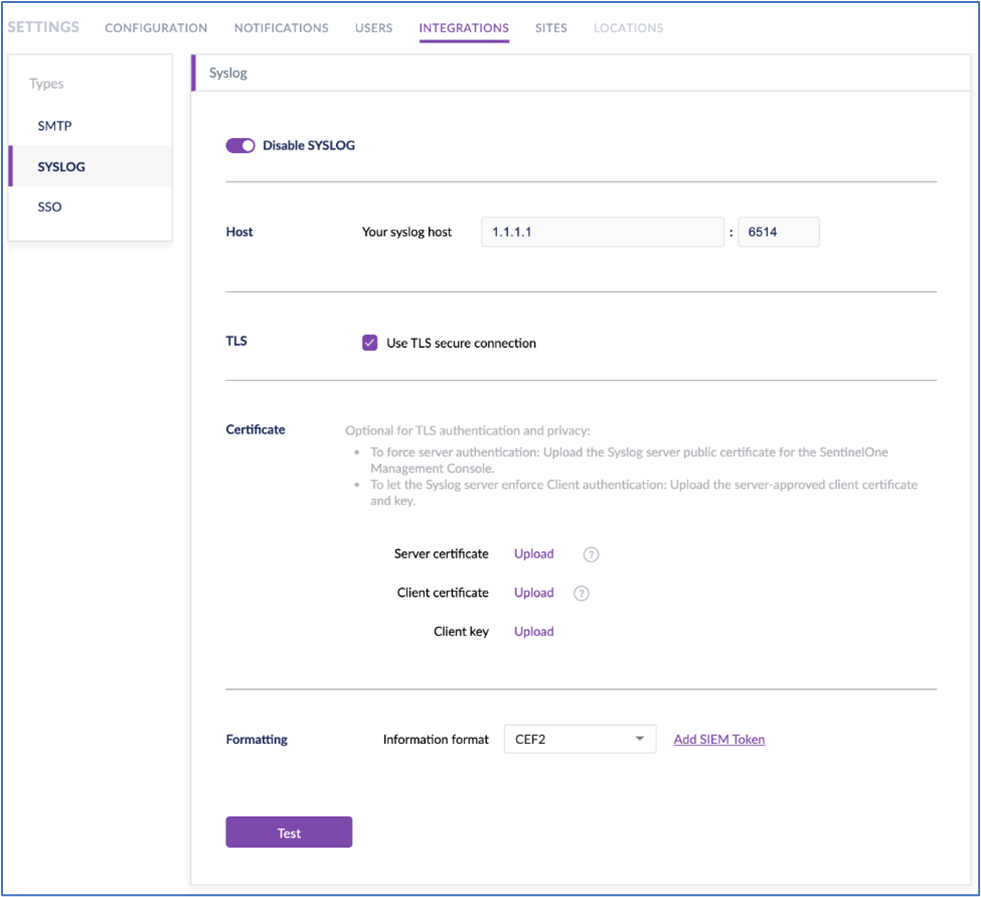
- Select the INTEGRATIONS tab.
- Under Types, select SYSLOG.
- Toggle the button to enable Syslog.
- Under Host, enter your CCE VM IP address and port 514.
- Under TLS, enable TLS.
- Under Formatting, select CEF2.
- Save changes.
- Configure SentinelOne to send notifications.
- Open the NOTIFICATIONS tab.
- Under Notification Types, check all options under Syslog notifications.
Note: We recommend enabling all notification options to send Syslogs. However, this setting is optional.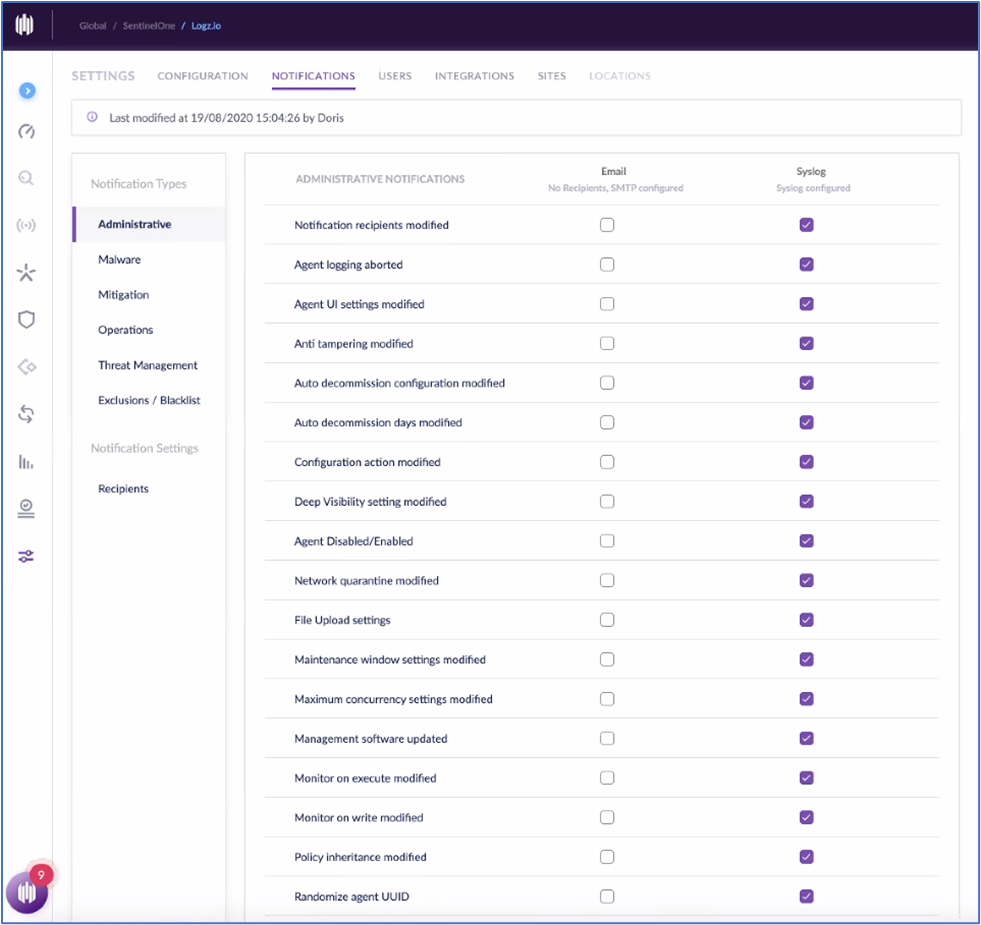
SentinelOne Remediator
1.0 Overview
ADR integrates with SentinelOne EDR using the SentinelOne Management API. This allows ADR to automatically isolate/unisolate endpoints, kill malicious processes, and enforce remediation workflows based on detected threats.
2.0 Prerequisites
On SentinelOne Console
- Access to SentinelOne Management Console.
- An API token created with proper scopes (Admin recommended).
- Scope permissions include:
- Agents: isolate/unisolate
- Threats: remediate
- Read/Write access to devices.
- Console URL (varies by region, e.g., https://<tenant>.sentinelone.net).
On ADR Platform
- ADR CCE with HTTPS access to SentinelOne Console.
- Admin access to ADR UI.
3.0 Configuration Steps
Step 1: Generate API Token in SentinelOne
- Log into SentinelOne Management Console.
- Navigate to Settings → Users → API Tokens.
- Click Generate New Token.
- Assign appropriate scopes:
- agents.isolate
- agents.unisolate
- threats.remediate
- Copy the token securely (only displayed once).
Step 2: Note Tenant Details
- Copy the Console URL (tenant-specific).
- Identify the Site ID or Account ID if needed for policy scoping.
Step 3: Configure in ARIA
- Log into ARIA UI → Administration → Remediator.
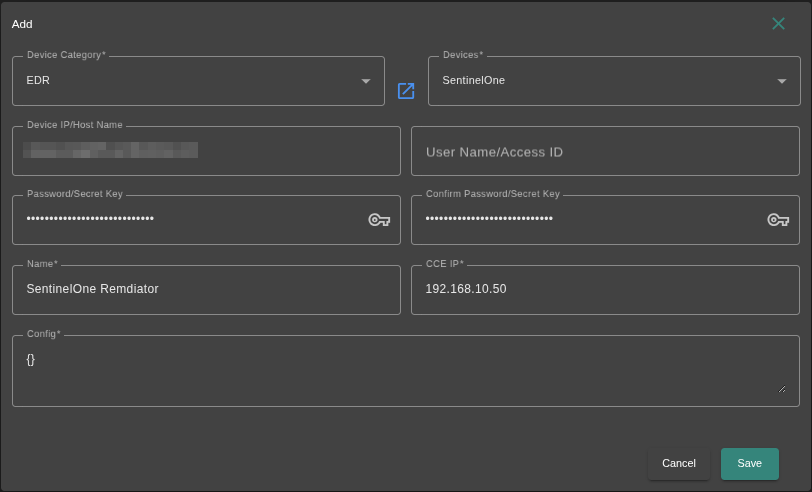
- Click Add.
- Fill in details:
- Device Category: EDR
- Devices: SentinelOne
- Host URL: SentinelOne Console URL
- User Name/Access ID: Leave blank
- API Token (Secret Key): From Step 1
- CCE IP: ARIA CCE IP
- Config: {}
- Save configuration.
4.0 Checking Test Connection
- In the ADR Remediator list, find the SentinelOne entry.
- Click Test Connection, then wait a minute and click Test Status.
- If successful → ARIA confirms API access.
- If failed → verify console URL, token, and permissions.
5.0 Verification
- Trigger a test remediation (e.g., isolate a test endpoint).
- In SentinelOne Console → Devices → Endpoint, confirm the device shows as Isolated.
- Trigger Unisolate and verify connectivity is restored.
- Review ARIA remediation logs for confirmation.
6.0 Troubleshooting
| Issue | Possible Cause | Resolution |
|---|---|---|
| 401 Unauthorized | Invalid/expired token | Generate a new token and update in ADR. |
| 403 Forbidden | Token missing required scopes | Ensure token includes isolate/unisolate/remediate permissions. |
| Connection Timeout | Wrong tenant URL or network block | Use the correct SentinelOne Console URL and allow HTTPS traffic. |
| Remediation fails selectively | Endpoint not online or not in assigned site | Ensure agent is active and mapped to the correct site in Console. |
If the issue persists, contact ARIA Support with version and configuration details.
7.0 References
Was this article helpful?
That’s Great!
Thank you for your feedback
Sorry! We couldn't be helpful
Thank you for your feedback
Feedback sent
We appreciate your effort and will try to fix the article